JPG Compressor is a useful tool that helps reduce the size of JPG images without sacrificing their quality. It works by enhancing the image details so that the picture takes up less storage space, yet appears crisp and clear. This current is especially helpful when you want to send photos over the Internet, share them with the Internet community, or send them quickly by email. JPG Compressor increases website loading speed, saves bandwidth, and makes file sharing easier. It is easy to use, free, and safe, making it a must-have tool for anyone who regularly works with images.
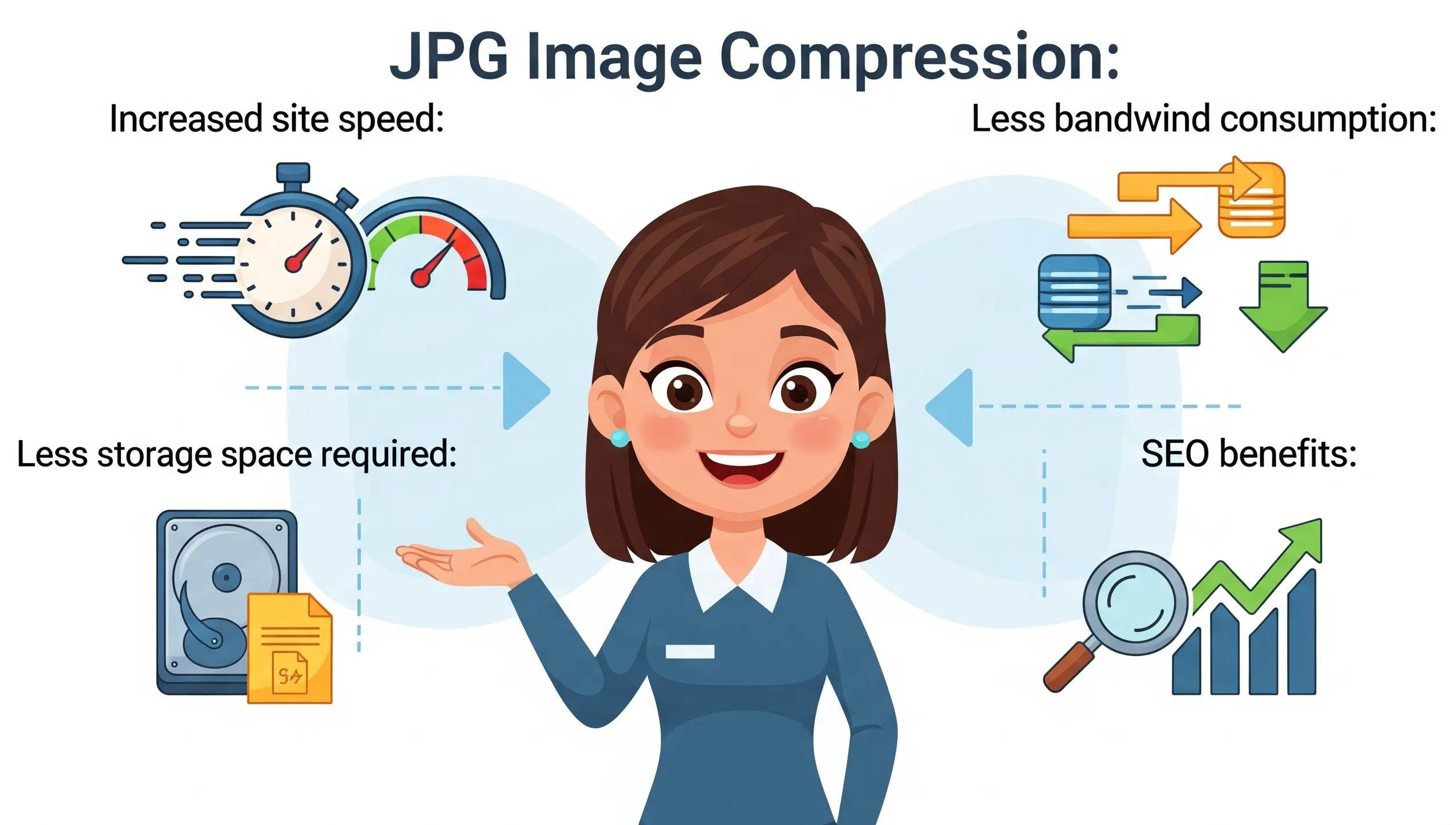
Increased site speed: Large images usually slow down page loading times substantially. Compressing JPG images makes your site load faster, which increases user engagement and reduces bounce rates.
Less bandwidth consumption: Smaller compressed images consume less bandwidth, which is useful for users with low-speed internet or limited data.
Less storage space required: For photographers and companies that save a large number of photos, compressing requires a lot of storage.
SEO benefits: Search engines rank web pages that load faster. Compressing images can help you increase your website's SEO ranking.
CodingIndialab offers an easy bulk JPG compressor. One of the best features of CodingIndialab is:
One of the best features of CodingInDialab’s software is that it does not require a sign-up. Users can use the compressor without signing up and giving their personal information.
Unlike some other compressors available on the internet, which limit you to compressing a certain number of images per day or require you to pay a subscription fee to compress any images you want, CodingInDialab allows you to compress as many JPG photos as you want for free.
Batch JPG Compressor has the feature of uploading more than one image at a time. Batch processing offers time and effort savings and is ideal for customers who need to compress a large number of pictures in a short period.
CodingInDialab Compressor reduces file size without affecting high-quality photos. The user can specify the desired amount of compression, maintaining a balance between file size and quality.
Due to its clear and intuitive user interface, this software is easy to use for any level of user. You simply drag and drop your photos, choose your compression ratio, and you're done.
The process is fast, allowing users to quickly compress their photos without much waiting.
CodingIndialab's Bulk JPG Compressor is easy to use. Just follow these steps:
Visit CodingIndialab's website and find the Bulk JPG Compressor page.
Drag your JPG photos or click to upload them from your computer. Multiple uploads can be made at once.
Press the Compress button and let the software run your images, with a little patience, so that you have a downloadable link available in front of you after successful execution.
Once the compression is complete, you can download the compressed images directly to your device.
We would love to hear your feedback. Your review will help us continue improving.
Please Review Us
JPEG compression is used for photo sessions, reducing the file size of images with ornate colors and transitions in between, such as portraits, landscapes, or digital artwork. On the Internet, JPEG images are used to upload images to email, social media, and other places where reduced file size and loading speed are required. A JPEG image, kept in compressed form for sharing and saving, does not necessarily take up more storage space, just at a more or less acceptable quality.
Yes, JPEG compression reduces quality, especially when it is extremely high compression that causes a large amount of data to be lost. The point to note here is that JPEG is a lossy method of compression: it removes some of the image information to reduce the size of the compressed file. Sometimes, even a slight loss in quality under moderate compression is not visible to human eyes. So, it is always a question of maintaining a balance between the weight and quality of the image, yet it appears fine to human eyes.
In case of compression, the JPEG file will be scanned by the compression engine, which removes most of the less important visual data in such a way that it remains unobservable to human eyes. It deals with color details and smooths out various gradients in the image so that the file size can be reduced. Compression defines the loss. It is important to note that any lost data cannot be recovered. So, the result is a smaller file that appears almost the same to the eyes in most situations.
Reducing the visual data in such a way that it is less noticeable to human eyes is the principle on which JPEG compression is based. To do this, the image is transformed into a frequency domain using a method called the Discrete Cosine Transform (DCT). The DCT divides the image into blocks and detects the parts of the image that contain important details and those that do not. The less important details are compressed intensely. As a result, an image is obtained that is much smaller in size, but its quality remains quite good.

Your Rating : Good!