
Input
Result
End Balance
$0
Initial Deposit
$0
Total Contributions
$0
Interest Earned
$0
$0
$0
$0
$0
| Year | Deposit | Interest | End Balance |
|---|
The Savings Calculator is a computer-based calculator that helps you calculate how much your reserve will increase over a period based on your monthly contributions, interest rates, and duration. It helps you work out how much you need to get back on a monthly or annual financial target.
It is most commonly used for planning:
Using a savings calculator is an important component of smart financial planning. Here's why:
Using a savings calculator requires the following entries:
With these values entered, the calculator immediately displays:
Asset calculators are usually based on the theory of compound interest, which means that they grow savings above the principal and interest.
Here's the formula used:
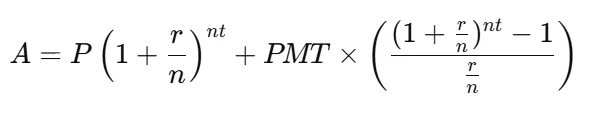
Where:
You don’t need to remember only the formula; the calculator will do all the calculations for you!
| User Type | How They Use Savings Calculator |
|---|---|
| Student | Plan education savings |
| Employee | Save for retirement or emergency funds |
| Investor | Estimate future value of monthly savings |
| Business Owner | Plan capital or business savings |
| Parents | Save for child's school, college, or wedding |
Let’s say:
Using a Savings Calculator, your total value becomes ₹181,420, out of which ₹51,420 is interest earned.
This shows how small, regular savings can grow big over time.
The monthly interest calculator helps determine how frequently savings will accumulate over time.
| Feature | Savings Calculator | Interest Calculator | Investment Calculator |
|---|---|---|---|
| Purpose | Plan future savings and goals | Calculate interest earned or paid | Measure returns on investments (stocks, funds) |
| Typical Inputs | Initial amount, regular contribution, rate, time | Principal, rate, time | Initial investment, periodic investment, returns, time |
| Best For | Goal-based planning (retirement, education, emergency) | Loans, FDs, RDs, simple interest checks | Comparing investment growth, CAGR, expected returns |
| Output | Final accumulated amount, total contributions, interest earned | Total interest and final amount | Projected portfolio value, CAGR, periodic returns |
| Complexity | Moderate — compound interest + periodic contributions | Low — simple or compound interest formulas | Variable — may include volatility, CAGR, scenarios |
Compound interest assists your assets in increasing much faster because you earn interest on your initial money or the interest that gets added each and every calendar month and every other calendar year.
For example:
Compound interest gives you ₹3,466 extra!
A savings calculator is useful for:
We would love to hear your feedback. Your review will help us continue improving.
Please Review Us
Yes, it helps you plan how much to save monthly for building a retirement fund.
Yes, you can calculate both monthly and yearly savings growth.
Most savings calculators are based on compound interest.
Yes, it provides very accurate interest-based results.
Your Rating : Good!